

 | | |||||||||||||||||||||||||||||||||||||||||||||||||||||||
|---|---|---|---|---|---|---|---|---|---|---|---|---|---|---|---|---|---|---|---|---|---|---|---|---|---|---|---|---|---|---|---|---|---|---|---|---|---|---|---|---|---|---|---|---|---|---|---|---|---|---|---|---|---|---|---|---|
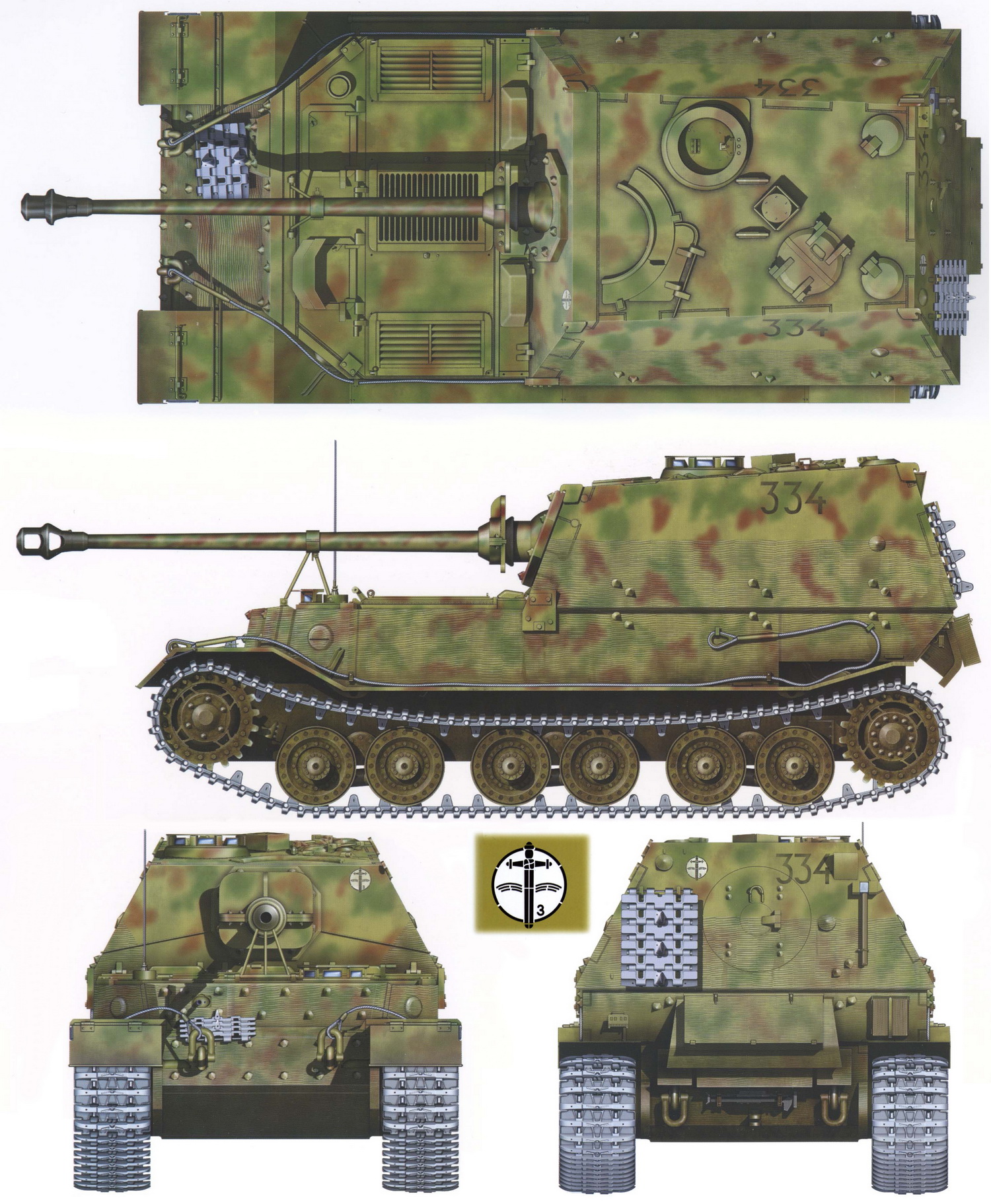
The Elefant (German for "elephant") was a Schwerer Panzerjager (German: "heavy tank-hunter" or a tank destroyer) of the German Wehrmacht during World War II. It was built in small numbers in 1943 under the name Ferdinand after its designer Ferdinand Porsche, using tank hulls that had been
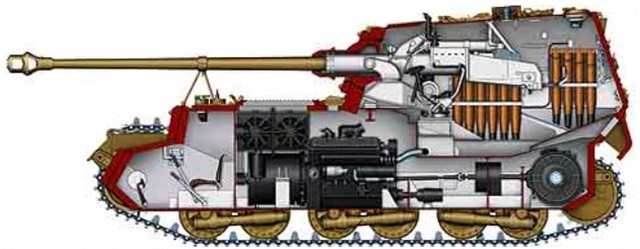
Kranick-Desel Land Systems (KDLS) obtained original blueprints (by means undisclosed) and built one unit per original specification. After extensive testing they found a plethora of potential alterations to the design they felt they would improve the vehicle (beyond the obvious rearmament, repowering, and addition of gravpods). Development History In NAzI Germany Porsche GmbH had manufactured about one hundred chassis for their unsuccessful proposal for the Tiger tank, the "Porsche Tiger," in the Nibelungenwerk factory in Sankt Valentin, Austria. Both the successful Henschel proposal and the Porsche design used the same Krupp-designed turret, the Henschel design had its turret more-or-less centrally located on its hull, while the Porsche design placed the turret much closer to the front of the superstructure. Since the competing Henschel Tiger design was chosen for production, the Porsche chassis were no longer required for the Tiger tank project. It was therefore decided that the Porsche chassis were to be used as the basis of a new heavy tank destroyer, Ferdinand, mounting Krupp's newly developed 88ᴍᴍ (3½ in) Pak 43/2 anti-tank gun. This precise long-range weapon was intended to destroy enemy tanks before they came within their own range of effective fire. Ferdinand was intended to supplant previous light tank destroyers such as Marder II and Marder III in the offensive role. A similar gun was used in the lightly armored Hornisse (later known as Nashorn) tank destroyer, built at the same time. Under Kranick-Desel Land Systems After building KDLS "Elefant 001," the engineers began designing a new powerplant, only to discover there were already several that matched the necessary specification; In fact, there was three that KDLS themselves built, one of which provided 75% of the power needed but took only ⅓ the space available without modification; In theory, they could have mounted 3 such engines and had 2¼× the needed power. These used far less fuel per ton as well; The original fuel tanks could carry enough fuel to run the tanks for 521 miles. In the end KDLS engineers choose to go with two engines for easier access in operation and to triple the operational range with the original fuel tank design. Design Chassis In the original design, the engines mounted amidships; This forced Ferdinand developers to mount the anti-tank main gun armament at the rear of the hull. A sloped casemate was built around the gun emplacement, with the driver and radio operator were in separate compartments in the main hull and the gunner and commander in the casemate. As the engines were placed in the middle, the radio operator and the driver were separated from the rest of the crew and could be addressed only by intercom. KDLS engineers made no attempt to resolve this; They simply added a modern intercom system, but they did change the radio's receiver and speaker to the driver and commander's stations, reducing the required crew by one; The space itself, being still open and accessible, could be used as an operational engineer's position. The original armor was increased to 7.88 inch (200mm) by bolting on a second plate; KDLS engineers, working essentially from scratch, redid the armor as 11.81 inches (300mm) right off, and replaced the ancient rolled steel (good enough to stop common slug throwers but completely outmatched by anything currently on the battlefield) to modern REF-standard armor plating. Drive The original design used twin gas fueled air cooled engines to drive two electric motors; Other than to replace the gas engines with a pair of hydrocell engines (hydrocell being the standard), and updating the generator (ironically provided by Siemens-Schuckert, who provided the original design generators), very little "real" improvements could be made in this regard. The drive motors were another matter; Rather than connecting the drive motors to drive sprockets, the drive motors were connected directly to the 12 wheels, as well as the drive sprockets (though the later only to ensure the caterpillar stayed properly strained during movement, so as not to jump off track). This allowed the tank to continue to function even if a track were destroyed. These changes didn't improve speed (only 19 mph/30kph), but did improve damage recovery ability and range (to 521 miles/838.4 km). The systems was also far more reliable in the field; The original design was maintenance heavy, with drive sprockets requiring replacement every 311 (or so) miles. The new drive sprockets, because they really weren't taking strain but rather removing slack, can go "about" 1,000 miles (destruction testing showed and average of 993⅕ miles). The change to wheel-driven function proved particularly critical; Minor damage to tracks on the original design would leave a mostly intact vehicle vulnerable to capture, as the crews could not effectively repair them under fire. With the tracks now being a secondary matter intended primarily to improve traction and distribute weight more widely, the tanks were far less likely to become stranded behind enemy lines, and more readily able to save themselves (the Elefants at Kursk couldn't be rescued at all in the later months of the battle, and thus were usually destroyed in place- their crews rarely reaching friendly lines). As a final, though standard measure, gravpods were installed primarily for traversing unusually rough terrain and to allow a crippled vehicle to retreat to friendly lines. Armament The NAzIs built their Elefant with an 88ᴍᴍ Panzerabwehrkanone 43/2 gun "Pak 43 anti-tank gun." KDLS engineers settled on the L-15b Rail Launcher in a similar mindset (though there was one attempt to build one with a L-35 Rail Launcher that succeeded for about 14 minutes before the gun's weight crushed the mount and was in danger of crushing the whole tank, and had to be abandoned at their testing facility). The Pak 43 had 25° traverse and elevation.; The KDLS design didn't allow for traverse, but has a 38° inclination and an impressive -15° declination, In September 1943 all surviving Ferdinands were modified based on battle experience by adding a ball-mounted MG-34 in the front, a commander's cupola from a standard StuG III for improved vision, and the application of Zimmerit paste. The KDLS engineers were ignorant that these were "upgrades" and had done two of the three already, with the MG-34 replaced by an L-02a in essentially the same role. Production The UGC shocked many when they ordered 200 Elefants for the REF Army, even though the technically far superior M-602 Anarissa SePATaK was already in service, with over 1,000 companies made of solely Anarissa's in nearly that number (180-210) already in action. The order was received and the tanks delivered, and they "have" seen some action, but the true purpose it was later discovered was to encourage other buyers, which it did in some numbers; KDLS had to contract out construction in dozens of systems, solely to limited production of their own. As much as the tanks real capabilities is the novelty of the vehicle, and their impressive appearance; Even the Geh 'Dia have 2 (under 501 Name: Sd. Kfz. 184 Panzerjager Tiger (P). Model Type: Infantry Support Tank. Class: Armored Artillery Support. Crew: 2 or 3; Commander, Driver-Mechanic/Executive Commander, Gunner/Mechanic. The Commander has master both the Driver-Mechanic duties and the Gunner duties; To become a Driver one must first master the duties of a mechanic; The Gunner is the underway mechanic, but hasn't mastered all of the mechanics duties yet. Passengers: None; Not even possible. MDC By Location: | ||||||||||||||||||||||||||||||||||||||||||||||||||||||||
| Hull- Crew Compartment- Hatches (2)- Wheels (12)- Casemate- | 800 150 100 each 100 each 500 | Main Gun- Secondary guns (2)- Engine Compartment- * Tracks (2) | 150 100 140 100 each | |||||||||||||||||||||||||||||||||||||||||||||||||||||
| Notes: Usual penalties apply. * Destroying one track but not the other will cause the vehicle to suffer a -12% piloting skill; Destroying or removing the other track will negate this on flat hard surfaces, but cause a -25% to pilot on sand and mud. Effects are cumulative. Speed and Statistical Data: | 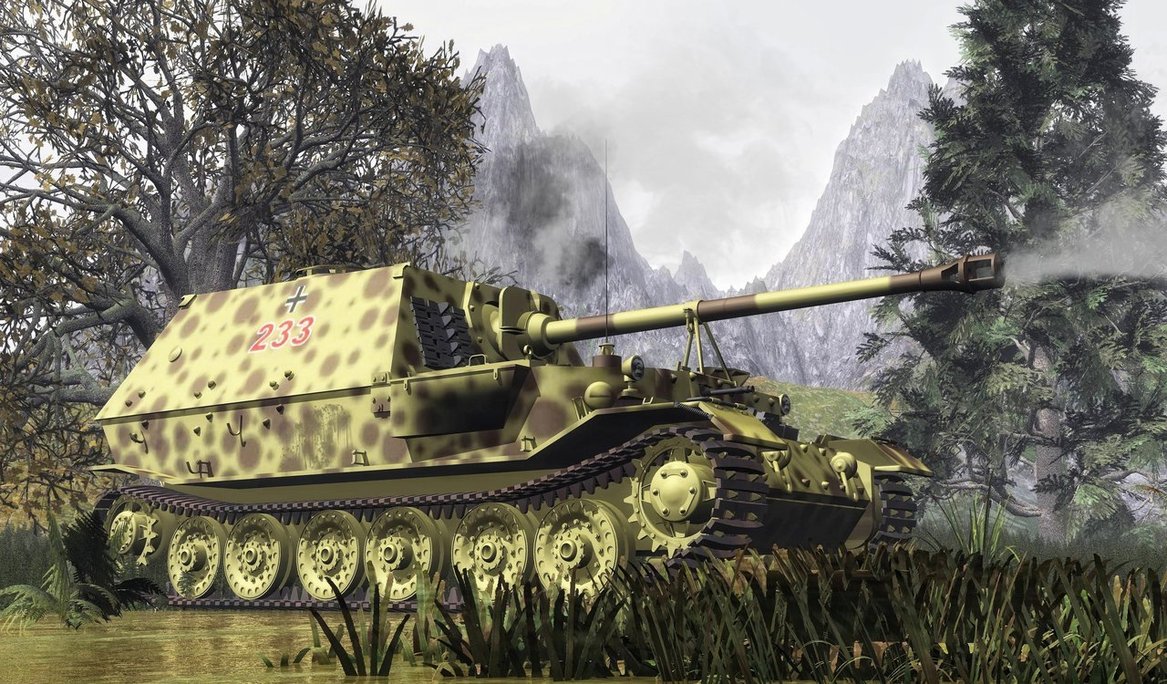 | |||||||||||||||||||||||||||||||||||||||||||||||||||||||
unknown, possibly FBX 21555320). | ||||||||||||||||||||||||||||||||||||||||||||||||||||||||
| Speed: 19 mph (30kph). NOTE: Due to the use of ultra-powerful grav pods, there is NO physical terrain that they can't traverse, period. Hovering Height: From 2 to 10 feet. Maximum Range: 25,000 miles. Height: 9 feet 9 inches (2.97m). Width: 11 feet 1 inches (3.38m). Length: 26 feet 8 inches (8.14m) with gun. Weight: 65 tons (143,000 lb). Powerplant: Twin Ventro 81 hydrocell turbines; Output: 442 Kw at 592 hsp; Range: 521 miles/838.4 km. | Hover System: Standard grav pods. Drive System: Twin SHr41 dual-phase aeration jets; Output: 22,000 hsp. Cargo Capacity: Crew supplies only. Beyond that, a few pounds of various cargos can be to be tied onto the hull; Care must be taken to ensure that such cargo's exposure to environmental factors (including chemical, biological, and nuclear/Reflex weapons) is minimized, and should be restricted to crew or critical battlefront supplies only. Cost and Availability: Each tank costs 1½m€, but is basically always available. Black Market Cost and Availability: Between 1,000 and 50m€; Not generally available, since they'd be captured or stolen. | |||||||||||||||||||||||||||||||||||||||||||||||||||||||
| Weapon Systems: | ||||||||||||||||||||||||||||||||||||||||||||||||||||||||
| 1. L-15b Rail Launcher: This rail launcher system consists of a semi automatic weapon system. The Type 15b system is fed from a 20 belt rather than the normal detachable magazine. The system is radar controlled. Designed for SRM's. Purpose: Heavy Assault. Weight: 3⅖ tons Damage and Range: Varies by type used. Rate Of Fire: Per gunner's attacks per melee. Payload: 20 per magazine. Takes 20 minutes to reload. Bonus: Either quadruples the normal range of the missile OR triples it and adds +3 to strike. | 2. L-02a Rail Launcher: A single unit version of the towed LIMA-02 (said "LEE-MA zero too") is fed from a vehicle mounted magazine with 800-round capacity. This system is effective both in a low-altitude air defense role, and in a ground-role. The system is optically or radar controlled. Designed for Micro-Missiles. Purpose: Heavy Assault. Weight: 1⅕ tons Damage and Range: Varies by type used. Rate Of Fire: Per gunner's attacks per melee. Payload: 800 rounds (loads from the sides). Bonus: Either quadruples the normal range of the missile OR triples it and adds +3 to strike. | |||||||||||||||||||||||||||||||||||||||||||||||||||||||
| Features: | ||||||||||||||||||||||||||||||||||||||||||||||||||||||||
MDC By Location: Pod: 50 Fiber Optic Cable: 10 Effect: Extends range of any sensors 10× (or defeats other penalties in a 5 mile area). | ||||||||||||||||||||||||||||||||||||||||||||||||||||||||