

 | Repair Facility. | | |||||||||||||||
|---|---|---|---|---|---|---|---|---|---|---|---|---|---|---|---|---|---|
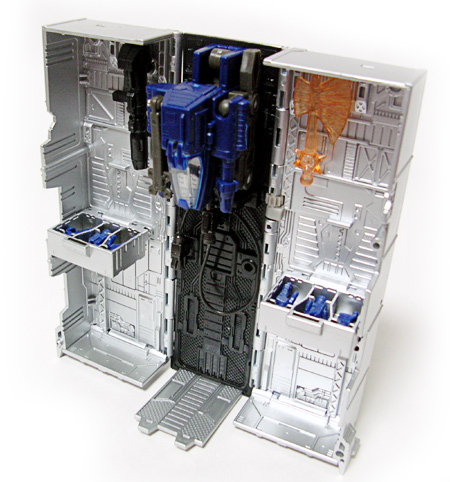
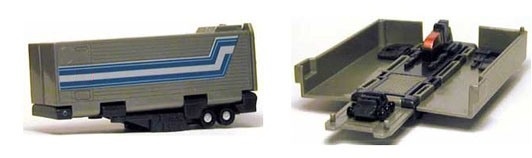
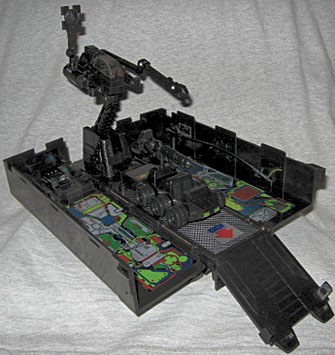
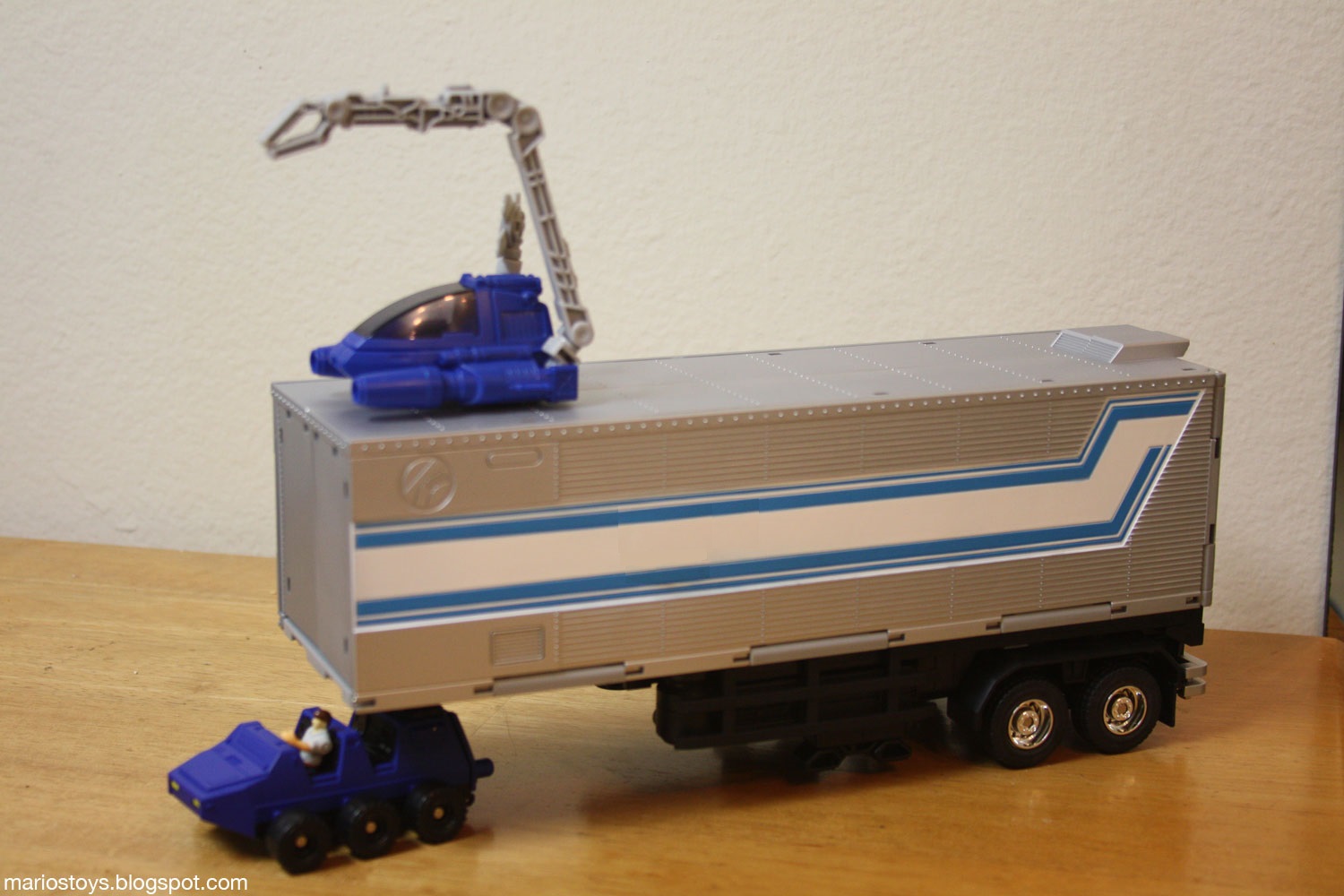
One day someone had the bright idea of micronizing an aircraft hanger, putting it on wheels, and splitting the top to give more room inside. The M-613 Mobile Repair Facility was the result. The developers included a
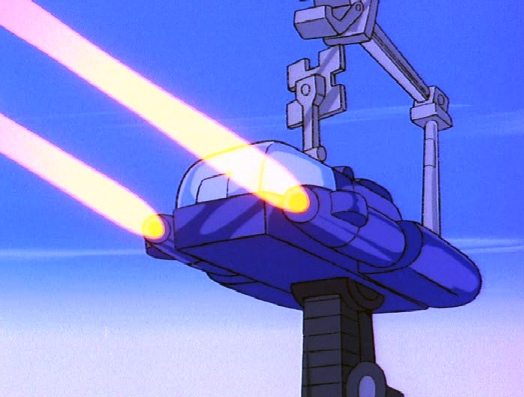
Most respected researcher in the field agree that the M-613 isn't entirely what the developers had hoped, but is highly effective in the support roles that it does fill, specifically the repair of badly damaged REF and RDF vehicles. There were plans to make them self-propelled but these plans were cancelled after a cost/benefit analysis determined there was absolutely no point to do so and became the M-611 Perceval "Charlie" Armored Repair Vehicle instead. There were plans to make them useable in space; This plan was cancelled due to the established existence of the MONTGOLIFIER-Class ARS (though they could be used in conjunction with the MONTGOLIFIER-Class). On the other hand, before the advent of the M-613 field repairs were in open lots with toolchests forming the perimeter of work areas, and lifting equipment haphazardly positioned wherever it was least in the way; This system lead to tools getting lost and equipment not getting repaired in the best possible manner. Worse, certain types of repairs could not be conducted without the M-613. Equipment commonly associated with the M-613 include: ML-3 Forklift; B-1d Combat Construction Robot; MPS Construction Robot MkV; M-3002; VT-01 Worker Veritech; VT-02 Construction Veritech; G&K-8 Gonk Power Drone Vehicle Maintenance Energizer (as needed) Exocomp Repair Robots (typically around 15 to 20) SF-45 Saker Pod; A modified version of the Terran United States Air Force SF-45 Saker Space Fighter is permanently installed on the boom; Additional Sakers can be carried as well. the primary modification is the removal of the drive, power, and missile systems (being at this point unnecessary) and radar antenna and the installation of a second arm. The grav pods installed in Sakers has been kept, since it can be used to help lift an object just as assuredly as it can be used to fly. Just about anything could conceivably be found around an M-613, ranging from old machines being repurposed to new machines being tested to crew-developed novelty tools to specialty equipment for specific duties (for example not every M-613 has tire replacement equipment). Basic set up of an M-613 takes about 20 minutes assuming no special equipment has to be unloaded; Erecting an M-613 takes about an hour, and spanning 2 together takes about another 15 minutes plus bridge erecting time (the longer the span the longer it takes to assemble). The longest possible time is 2 hours 21 minutes for some dedicated ship repair configurations. The M-613 has also breathed new life in the M-610 Gareth Unarmored Supply Vehicle, since it was designed specifically to be towed behind the M-610 (fits right above the deck with a trailer hitch on normal level flight). An M-3002 Low-Gravity Vehicle can tow an M-613, this is not recommended for long distances, and should be used for final positioning purposes only. There are nearly 1,000 individual variants of the M-613, though the major variants are vehicle repair, Mecha repair, ground-based ship repair, bridge construction, piling construction (typically used for bridge construction), building construction, and demolitions (vehicle, Mecha, and ships, not building). Name: M-613 Mobile Repair Facility Model Type: Trailer Crew: Not Applicable; Can have as large or small a crew as needed. Can only carry about 8 people, though. Passengers: None. MDC By Location: | |||||||||||||||||
| Hull- Crew Compartment- Hatches (6)- Spotlights (many, top of vehicle)- | 400 200 each 100 each 20 each | Engine Compartment- Fuel/Ammo Pods (6)- Wheels (8) | 100 200 each 50 each | ||||||||||||||
| Notes: Usual penalties apply. Speed and Statistical Data: | |||||||||||||||||
| Safe Speed: 200 MPH max. The grav pods WILL work over water. Hovering Height: From 2 to 10 feet. WARNING: Higher flight causes a 02% loss of piloting control per foot (-30% at maximum 15 foot hover height). Maximum Range: Per towing vehicle. Height: 22 feet 8.75 inches closed; 5 feet open. Width: 32 feet 1⅜ inches open, 10 feet 2⅓ inches closed. Length: 60 feet long. This length can be converted to height if necessary. | Weight: 12 tons Powerplant: Any common generator OR from towing platform. Hover System: Normal grav pods. Cargo Capacity: The Gareth can carry up to 400 tons supplies. Cost and Availability: Each unit costs 30,000€ and is always available. Black Market Cost and Availability: Between 1,000 and 3M€; Regularly available. | ||||||||||||||||
| Weapon Systems: | |||||||||||||||||
| 1. Decoy Pods: The Steneirian style decoy pods still in use on the Steiner Fighter has been installed on the M-611 under a working agreement with the Steiner Republic. Unlike the pods installed on aero-space craft, however, tankers LOVE the pods. The decoys themselves are specially modified Mini-Missiles that produce burning globs of magnesium/aluminum alloy to confuse both radar AND heat sensory systems, as well as creating a lot of smoke to obscure the tank. NOTE: Though the modified mini-missiles combine smoke flares, AMC/FDs, and LDP's, they aren't powerful enough for use with Destroids & etc. Reduce effects by 20% against smart missiles (add +20% to rolls for smart missiles). Purpose: Defense. Effect: 01-50: Enemy missile or missile volley detonates in chaff cloud-Missiles are all destroyed. 51-75: Enemy missile or missile volley loses track of real target and veers away in wrong direction (may lock onto another target). 76-00: No effect, missile is still on target. Also note that the chaff cloud will also blind nearby heat sensors (and optically based sensors at night) for 1 melee. They will suffer the following penalties: Reduce melee attacks/actions, and combat bonuses by half. Also, a cloud of smoke approximately 25² feet. Duration: 1D4 melee rounds. Rate of Fire: Once per melee. Payload: 6 chaff/flares. | 2. Smoke Dispensers (70): This last-ditch system throws out smoke flares capable of covering a 250² foot area. Special chemicals in the smoke obscures IR and heat sensors, and defeats visual tracking of the vehicle. Note that it DOESN'T make the vehicle invisible, but simply negates ALL bonuses to strike. Purpose: Obscuring the craft for a few moments. System Type: Active Defense. Effect: Creates a cloud of smoke that covers a 250² foot area. Range: A 250² foot area. Coverage Characteristics: A full 360 ° area. 3. Crew's Weapons: When all else fails, the crew can still defend themselves. All crew members are required to wear Rifleman Power Armor or better. | ||||||||||||||||
| Features: | |||||||||||||||||
MDC By Location: Pod: 50 Fiber Optic Cable: 10 Effect: Extends range of any sensors 10 times (or defeats other penalties in a 5 mile area). | |||||||||||||||||
The only weaps on the M-613 are the deck guns, and these are faily limited. | |||||||||||||||||