

 | | ||||||||||||||||||||||||||||||||||||||||||||||||||||||||||
|---|---|---|---|---|---|---|---|---|---|---|---|---|---|---|---|---|---|---|---|---|---|---|---|---|---|---|---|---|---|---|---|---|---|---|---|---|---|---|---|---|---|---|---|---|---|---|---|---|---|---|---|---|---|---|---|---|---|---|---|
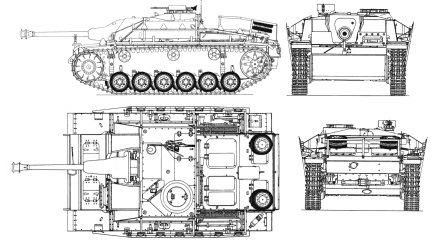
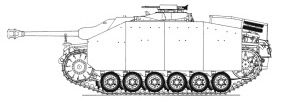
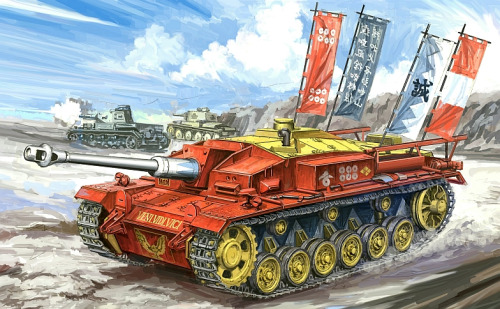
The Sturmgeschutz III (StuG III) assault gun was Germany's most produced armored fighting vehicle during World War II. It was built on the chassis of the proven Pan
Development The Sturmgeschutz III originated from German experiences in World War I when it was discovered that infantry lacked the means to effectively engage fortifications. The artillery of the time was heavy and not mobile enough to keep up with the advancing infantry to destroy bunkers, pillboxes, and other minor obstacles with direct fire. In 1935 Colonel (later General) Erich von MANSTEIN suggested that Sturmartillerie units would solve this problem. In 1936 they began development of an armored infantry support vehicle capable of mounting a 75ᴍᴍ (2.95 in) caliber fixed artillery piece fully integrated in a casemate allow a limited traverse of a minimum of 25° and provide overhead protection for the crew. The chassis and running gear of the Panzer III medium tank was used as a basis with a 75ᴍᴍ StuK 37 L/24 cannon. The StuGs were organized into battalions and followed their own specific doctrine. Infantry support using direct-fire was its intended role. Later there was also a strong emphasis on destroying enemy armor whenever encountered and a 7.92ᴍᴍ MG34 machine gun was mounted on a shield on top of the superstructure for added anti-infantry protection and an additional coaxial 7.92ᴍᴍ MG34. They were cheaper and faster to build than contemporary German tanks due to the omission of the turret which greatly simplified manufacture and allowed the chassis to carry a larger gun than it could otherwise. A rotating cupola with periscopes for the commander, a rotating machine gun mount for the MG loader, a Topfblende pot gun mantlet which was more effective at deflecting shots than the original boxy mantlet, and Zimmerit anti-magnetic coating were added as they were developed. Redevelopment KDLS couldn't find a completely intact example nor could they find complete blueprints for the StuG III, but they could find complete blueprints for the hull and were able to extrapolate enough of the guns to understand how they fit into the tank. From there it was determined the L-15b Rail Launcher was the best fit for the hull, with the L-02 Rail Launcher as the secondary armament. The rest of the tank had to be reconstructed by trial and error, a process that took about a year. Field testing with private militry contractors showed significant promise in security zone applications and anti-robot applications for various regional forces. The addition of gravpod technology increased the flexibility of the machines, though most operators reported the improvement as negligible in combat. Their frank assessment was that the tanks had to be set down to effectively engage due to the gun recoiling during firing even though rail guns don't create recoil. Subsequent users report the same issue, which has never appeared in any other platform and which has stymied KDLS engineers to irritation. Despite a functional use KDLS engineers added a muzzle break to the end. They didn't realize it wasn't necessary until years after mass production had started and by then it was too late. Current Users The REF has 6 hulls for "continuous analysis" (letting cadets and tankers ride around in the tanks so they can see how good they really have it, but the vast majority of the hulls are in the ownership of various regional forces and private militry contractors. Some Mandalorian Clans uses them on their homeworlds. Orcish mercenary battalions also love them, even though they're not the best front-line combat options. Units that have made it to the grey markets have found their way into the T'sentreadi Clans, but not extensively. To KDLS's chagrin, the biggest users are various Policlubs. The Flyjt policlub in particular love it for the NAzI aesthetic (for which they are infamous). | |||||||||||||||||||||||||||||||||||||||||||||||||||||||||||